Showing posts with label Margaret Devine. Show all posts

Monday, January 7, 2013

Party Like It's 1999 - Part 4 - Tears of A Clown


"Andrew, I hate to say this. You are in danger, in real danger, of becoming one of those bitter old men for whom sarcasm is not just a mode of expression, but the very fabric of life itself. "

When  Harold Goldman (Buck Henry) issues this warning to his son, Andrew (Matt McGrath) , he could easily be offering advice to all of Andrew's friends as well. This is a party on the eve on the Millennium, filled with twentysomethings who should have very comfortable lives, but who refuse to be happy, burdening themselves with what has now popularly become known as First-World problems.

If Woody Allen's neurotic New Yorkers are constantly looking back and fretting decisions they have made, Nick Davis' characters are fretting mistakes they have yet to make, and unfulfilled lives they have yet to live.

It isn't as if Davis isn't aware of how ridiculous their worries are, but he refuses to treat his characters as the butt of cheap jokes, either. Dan Futterman's Rufus Wild can be a pompous ass, whose biggest worry seems to be that he does not yet have a legacy at an age when other "geniuses" had already made their mark on history. He is about to let the best thing that ever happened to him, his girlfriend, Anabel (Jennifer Garner) walk away, seemingly just for the sake of change, and yet he is so afraid to make any choice in his life that he doesn't know what to do when his fantasy girl (Amanda Peet) practically offers herself to him.

"How can you keep your hands off of me? " she asks, voicing a feeling we have as well.

Sylvia, a singer played by Margaret Devine, is about to give up singing to become an ear doctor, and later leads the group in a sociological experiment of wearing words hung around their neck and seeing how it affects them emotionally.

Besides Henry Goldman, the only other older character is Goatman, played by comic Steven Wright with the same wry, sardonic twist his stage persona carries.

What Nick Davis realizes is that, much like someone with a psychosomatic illness, the pain is still real for these people, and so while we laugh with - and at - these people, we also feel for them. At least three of the characters in the film flirt with suicide, and Davis is deft enough to have us believe that a tragic ending is very much possible.

On set, while filming, most of these moments were just funny, very funny. When broken into moments like Sylvia explaining why she has always cared about ears, its hard not to laugh.

As with a lot of the great indie films of the mid-to-late nineties, 1999 was a movie that wanted to know why that generation really wasn't as happy as it should be.

In the end, I think it makes 1999 a much better movie, if one that was not as funny. The warning Harold offers to his son concludes:

"I know these men. They run from the world, they hide their feelings, they don't even know how unhappy they are. They are not well."

The film gives a nod not only to the neurotic comedies of Woody Allen, but to the sophisticated ones of Noel  Coward in a different era. Suki, played with equal parts empathy and dry wit by Sandrine Holt, even  uses a long cigarette holder and wears a cloche hat reminiscent of the flappers headwear of the 1920s.

Indeed, it is the plea Davis is making to his characters, and one that rings true.

So many of the actors named above give performances that allow an audience to care about them, even if that sometimes dampens the comedy.

If there is a flaw to the movie for me, it is the editing, which seems a bit disjointed at times in a way that doesn't serve the story. That is similar to a feeling I had the first time I saw the film screened.

Anyone who enjoyed the comedies from that period that refused to just play for laughs, such as Welcome to the Dollhouse or Spanking the Monkey, will find the time viewing this movie as well-spent. For others, a glimpse of future stars Futterman, Peet, Garner and Olyphant will be enough reason to check it out.

Unlike outside reviewers, I can't pretend to be objective. I liked the people involved and I liked the project. My overall experience was positive, and I got a good deal of laughs out of this viewing. However, anyone who has followed my blog knows that I do not labor under the illusion that everything I worked on was a classic.

I don't think it's an overstatement to say that 1999 is a lost gem from that era, and worth checking out.



Sunday, December 30, 2012

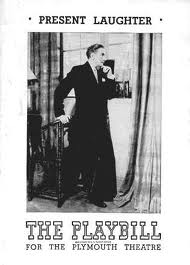
Party Like It's 1999 - Part 3 - Present Laughter


The making of 1999 was a great experience, but, like any film, not without it's challenges, one of which was that it was sometimes too good of an experience.

It can be a generalization to say that the atmosphere on the sets of comedies are more fun than on the sets of other genres, but not one without basis. The personality of the director certainly affects the mood on set, as does the collective personality of the crew.

The people who really count, though, are the ones in front of the camera, the actors. The greatest director in the world with the most talented DP and the best script is not going to make a good movie with bad actors. This doesn't mean the actors have to be big stars (although we had our share in that department), or long-term veterans (which surely Steven Wright and Buck Henry were). They just have to be talented, at least enough of them do.

Crews are aware of the needs of actors. You aren't going to be telling jokes and making light right before doing a scene where a father discovers his dead child. No, comedies allow for a little more room for levity, but sometimes, as an 1st AD, that is something you have to be careful of as well.

There are many hazards of being a 1st AD, one of which is that Murphy's Law, which rules on set anyway, will play tricks on you. I have no chronic illness that causes me to spend most of my day coughing, but for some reason, every AD will tell you that coughs have a habit of cruelly rising in your throat a second or two after you call "roll sound." The need to cough often seems directly proportional to the length of the scene, the longer and more quiet the scene, the more you need to cough.

1999 was, in many ways, a comedy of manners, updated from the Noel Coward era (more on the Coward comparison in the next post) to the dawn of a new era, the turn of the millennium. It wasn't the slapstick humor of Lucky Stiffs, a comedy I had done earlier. The main protagonists, played by Dan and Jennifer, were targets of the humor exactly because their characters were so serious.

Steven Wright, whose stand-up routine is all about his droll persona, brought a dry humor that started way before the camera rolled and lasted past cut, enough so that you would be accustomed to it and it didn't crack you up, but kept a smile on your face.

Matt McGrath, another fine actor who went on to a successful movie and TV career, had a character who was constantly sent into panic by his annoying father, played by Buck Henry. The scenes between the two were among the many that made it difficult to keep a straight face.

Then, there was Margaret Devine.

Margaret is certainly not as well known as many of the other young actors who were on that shoot. She had a nice role as one of the AA members in the Richard Lewis vehicle Drunks, and played Hugh Grant's assistant in Mickey Blue Eyes. She had a rather child-like voice, not unlike Kristin Chenoweth, and her Nick Davis seemed to find the perfect moments to have her inject herself in the proceedings. At the first words out of her mouth, I would immediately find myself consciously stifling laughter. I was certain that Margaret would be my undoing, that one day I would just burst into an uncontrollable fit of laughter that would end with the cast and crew staring at me as I ruined an otherwise perfect take.

Luckily, that never happened.

Other supporting cast had a similar effect, if to a lesser degree, including Allyson Downey's well-dressed lady and  Sandrine Holt's unabashed lesbian.

There were certainly serious scenes, even if, as with all comedies of manners, when seen objectively by the audience, they may be funny. One of these was a scene where Dan's character contemplates suicide. Dan's character had what we today would refer to as "first world problems," an existential angst that hardly seemed to warrant such drastic measures. For the actor, the scene could only be played with absolute seriousness, and we had a closed set for the scene. It was a very difficult scene for Dan, but one which he delivered very well.

Nick was more than the director and writer; he played a character who was videotaping the party, and he would often encourage improv. As an AD, it meant not letting the crew relax at the end of what they thought to be the end of a take, and to be aware of what Nick and the DP, Howard, were thinking and when they were done with a take.

I have spoken before of the natural tension that can develop between a DP and an AD, and that certainly was one of the challenges for me on this shoot. Howard was not a prima donna, and he was talented, but he had already been through one AD, and I got the sense that as he had been there from the beginning and I had not, he was determined to make sure that he controlled how things ran on set. With all the jumping around we did within the house, and the scheduling challenges of keeping a large ensemble, I tried to keep a tighter rein on the schedule than Howard would have preferred. He also had an annoying habit of suggesting that he wanted to change the order of scenes mid-day, even though the order had been clear from the call sheet from the previous night.

In thinking back on it, it was more of a nuisance than a real problem. We always found a way to make it work, and there was so much right with the project that neither of us wanted to get in the way of it. Howard had a strong background as a gaffer, his crew was fast, and I can't say that we were waiting on him very often.

Until I started to write this series on the movie, I hadn't seen the film since the crew screening. I remember my first impression was that the final product was not as funny as the either my experience on set or in dailies. Then again, I was so close to it at the time that maybe my expectations were for something different. In the next and final post on this movie, I will review it with the perspective I now have, as well as offer some final thoughts.