Saturday, January 12, 2013

Johnny Twennies - Part 1 - Do You Dream in Black and White?


"Oh, my life is in Black and White,
Like an old time picture show"
                                                  - Black and White, Roseanne Cash


Who wouldn't love a 35mm film in Black and White that hearkened back to the early days of talking pictures, when screwball comedies had wise-cracking but charming leading men with a soft-spot for just the right dame and cool dance numbers?

After the success of The Artist, one would think that love for old movies would make a nostalgic nod to those film a natural.

In the late 90s, when two young men approached me about an independent film they wanted to shoot called Johnny Twennies, it didn't seem that obvious.

Personally, I loved the script on first read. Most scripts that were a throwback to classic films were noirs, modern attempts to be Raymond Chandler.

This script was an homage more to the movies of Ben Hecht like His Girl Friday and the original The Front Page (1931) ( not one of the many remakes, such as the popular Billy Wilder version with Jack Lemmon and Walter Matthau). It also had an interesting and unique twist; it was not set in the 1920s, but rather in contemporary New York (late 90s) with a lead character, Johnny Twennies, who lived and dressed as if it were the 1920s. A reporter, he still used an old typewriter, rode around on a bicycle, treated women with respect, and saw the world as one with clear good and evil - black and white.

Of course, there was a girl; in keeping with these screwball comedies, actually two: one that you knew he should wind up with, and one that seemed all wrong but might wind up getting him in the end.

When I met producers Adam Abraham (co-writer/Director) and Gibson Frazier (co-writer/Lead Actor), it all sounded too good to be true. This was exactly the type of script I longed to be a part of, but would it actually look like the script, or just another of those bad send-ups that we still see so many of today, especially from film students?

Film students was exactly the extent of their experience, as well. They had collaborated on a very clever short that Adam had written and directed as his USC thesis project called Song of the Sea, a cruise ship musical comedy. Johnny Twennies would have music as well, some original, all reminiscent of the music of the 1920s. Could a first time feature director, with an actor who had never been a lead in a feature, actually pull this off, all while wearing the multiple hats of producers/writers/director and lead actor? .

While respect for the proprietary nature of budgets precludes me from discussing the actual budget, suffice to say that we were going to be doing a musical with period costumes and set dressing and more than 50 speaking roles on 35mm film for less than films I budget on digital today.

What reassured me was their smarts, their level of preparedness, how thoroughly they had researched and planned, and the fact that they were fully aware of how difficult this would be. They had a good deal of confidence, but it wasn't based on naivety or bluster, as I have often encountered.

If I had to go up against the long odds of pulling this off, these were certainly elements I would want on my side. Something about them told me that if I did my job right as line producer, they had what it took to get this job done.

They had done a great job of financing the film from friends, family and associates. This was no pie-in-the-sky dream. They had worked hard at making it a reality, and in the very early stages of prep, we had to wait for money to be released from escrow at the point where all the money was raised.

It was at this point, while the guys were paying bills out of their pockets, that a group of investors offered them an influx of cash and a bigger budget, with the caveat that the film be shot in color, and not Black&White. It was an offer that would have been too good to refuse for a lot of first-time feature filmmakers. I can't honestly say whether I would have stuck to my guns the way they did, but they made a clear-sighted decision to eschew the offer and make the film they set out to make.

These are the type of bold choices that indie filmmakers always discuss, mostly because the offer is never really out there. When the check is staring you in the face, the decision becomes more difficult.

While working on the smaller budget certainly presented a challenge for me, my respect for the two of them, which was high at the start, now went through the roof.

They had done their job; now I owed them the best team I could put together. In Part 2, I will talk about assembling that team, their casting choices, and the pre-production period.


Monday, January 7, 2013

Party Like It's 1999 - Part 4 - Tears of A Clown


"Andrew, I hate to say this. You are in danger, in real danger, of becoming one of those bitter old men for whom sarcasm is not just a mode of expression, but the very fabric of life itself. "

When  Harold Goldman (Buck Henry) issues this warning to his son, Andrew (Matt McGrath) , he could easily be offering advice to all of Andrew's friends as well. This is a party on the eve on the Millennium, filled with twentysomethings who should have very comfortable lives, but who refuse to be happy, burdening themselves with what has now popularly become known as First-World problems.

If Woody Allen's neurotic New Yorkers are constantly looking back and fretting decisions they have made, Nick Davis' characters are fretting mistakes they have yet to make, and unfulfilled lives they have yet to live.

It isn't as if Davis isn't aware of how ridiculous their worries are, but he refuses to treat his characters as the butt of cheap jokes, either. Dan Futterman's Rufus Wild can be a pompous ass, whose biggest worry seems to be that he does not yet have a legacy at an age when other "geniuses" had already made their mark on history. He is about to let the best thing that ever happened to him, his girlfriend, Anabel (Jennifer Garner) walk away, seemingly just for the sake of change, and yet he is so afraid to make any choice in his life that he doesn't know what to do when his fantasy girl (Amanda Peet) practically offers herself to him.

"How can you keep your hands off of me? " she asks, voicing a feeling we have as well.

Sylvia, a singer played by Margaret Devine, is about to give up singing to become an ear doctor, and later leads the group in a sociological experiment of wearing words hung around their neck and seeing how it affects them emotionally.

Besides Henry Goldman, the only other older character is Goatman, played by comic Steven Wright with the same wry, sardonic twist his stage persona carries.

What Nick Davis realizes is that, much like someone with a psychosomatic illness, the pain is still real for these people, and so while we laugh with - and at - these people, we also feel for them. At least three of the characters in the film flirt with suicide, and Davis is deft enough to have us believe that a tragic ending is very much possible.

On set, while filming, most of these moments were just funny, very funny. When broken into moments like Sylvia explaining why she has always cared about ears, its hard not to laugh.

As with a lot of the great indie films of the mid-to-late nineties, 1999 was a movie that wanted to know why that generation really wasn't as happy as it should be.

In the end, I think it makes 1999 a much better movie, if one that was not as funny. The warning Harold offers to his son concludes:

"I know these men. They run from the world, they hide their feelings, they don't even know how unhappy they are. They are not well."

The film gives a nod not only to the neurotic comedies of Woody Allen, but to the sophisticated ones of Noel  Coward in a different era. Suki, played with equal parts empathy and dry wit by Sandrine Holt, even  uses a long cigarette holder and wears a cloche hat reminiscent of the flappers headwear of the 1920s.

Indeed, it is the plea Davis is making to his characters, and one that rings true.

So many of the actors named above give performances that allow an audience to care about them, even if that sometimes dampens the comedy.

If there is a flaw to the movie for me, it is the editing, which seems a bit disjointed at times in a way that doesn't serve the story. That is similar to a feeling I had the first time I saw the film screened.

Anyone who enjoyed the comedies from that period that refused to just play for laughs, such as Welcome to the Dollhouse or Spanking the Monkey, will find the time viewing this movie as well-spent. For others, a glimpse of future stars Futterman, Peet, Garner and Olyphant will be enough reason to check it out.

Unlike outside reviewers, I can't pretend to be objective. I liked the people involved and I liked the project. My overall experience was positive, and I got a good deal of laughs out of this viewing. However, anyone who has followed my blog knows that I do not labor under the illusion that everything I worked on was a classic.

I don't think it's an overstatement to say that 1999 is a lost gem from that era, and worth checking out.


Sunday, December 30, 2012

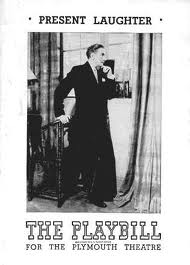
Party Like It's 1999 - Part 3 - Present Laughter


The making of 1999 was a great experience, but, like any film, not without it's challenges, one of which was that it was sometimes too good of an experience.

It can be a generalization to say that the atmosphere on the sets of comedies are more fun than on the sets of other genres, but not one without basis. The personality of the director certainly affects the mood on set, as does the collective personality of the crew.

The people who really count, though, are the ones in front of the camera, the actors. The greatest director in the world with the most talented DP and the best script is not going to make a good movie with bad actors. This doesn't mean the actors have to be big stars (although we had our share in that department), or long-term veterans (which surely Steven Wright and Buck Henry were). They just have to be talented, at least enough of them do.

Crews are aware of the needs of actors. You aren't going to be telling jokes and making light right before doing a scene where a father discovers his dead child. No, comedies allow for a little more room for levity, but sometimes, as an 1st AD, that is something you have to be careful of as well.

There are many hazards of being a 1st AD, one of which is that Murphy's Law, which rules on set anyway, will play tricks on you. I have no chronic illness that causes me to spend most of my day coughing, but for some reason, every AD will tell you that coughs have a habit of cruelly rising in your throat a second or two after you call "roll sound." The need to cough often seems directly proportional to the length of the scene, the longer and more quiet the scene, the more you need to cough.

1999 was, in many ways, a comedy of manners, updated from the Noel Coward era (more on the Coward comparison in the next post) to the dawn of a new era, the turn of the millennium. It wasn't the slapstick humor of Lucky Stiffs, a comedy I had done earlier. The main protagonists, played by Dan and Jennifer, were targets of the humor exactly because their characters were so serious.

Steven Wright, whose stand-up routine is all about his droll persona, brought a dry humor that started way before the camera rolled and lasted past cut, enough so that you would be accustomed to it and it didn't crack you up, but kept a smile on your face.

Matt McGrath, another fine actor who went on to a successful movie and TV career, had a character who was constantly sent into panic by his annoying father, played by Buck Henry. The scenes between the two were among the many that made it difficult to keep a straight face.

Then, there was Margaret Devine.

Margaret is certainly not as well known as many of the other young actors who were on that shoot. She had a nice role as one of the AA members in the Richard Lewis vehicle Drunks, and played Hugh Grant's assistant in Mickey Blue Eyes. She had a rather child-like voice, not unlike Kristin Chenoweth, and her Nick Davis seemed to find the perfect moments to have her inject herself in the proceedings. At the first words out of her mouth, I would immediately find myself consciously stifling laughter. I was certain that Margaret would be my undoing, that one day I would just burst into an uncontrollable fit of laughter that would end with the cast and crew staring at me as I ruined an otherwise perfect take.

Luckily, that never happened.

Other supporting cast had a similar effect, if to a lesser degree, including Allyson Downey's well-dressed lady and  Sandrine Holt's unabashed lesbian.

There were certainly serious scenes, even if, as with all comedies of manners, when seen objectively by the audience, they may be funny. One of these was a scene where Dan's character contemplates suicide. Dan's character had what we today would refer to as "first world problems," an existential angst that hardly seemed to warrant such drastic measures. For the actor, the scene could only be played with absolute seriousness, and we had a closed set for the scene. It was a very difficult scene for Dan, but one which he delivered very well.

Nick was more than the director and writer; he played a character who was videotaping the party, and he would often encourage improv. As an AD, it meant not letting the crew relax at the end of what they thought to be the end of a take, and to be aware of what Nick and the DP, Howard, were thinking and when they were done with a take.

I have spoken before of the natural tension that can develop between a DP and an AD, and that certainly was one of the challenges for me on this shoot. Howard was not a prima donna, and he was talented, but he had already been through one AD, and I got the sense that as he had been there from the beginning and I had not, he was determined to make sure that he controlled how things ran on set. With all the jumping around we did within the house, and the scheduling challenges of keeping a large ensemble, I tried to keep a tighter rein on the schedule than Howard would have preferred. He also had an annoying habit of suggesting that he wanted to change the order of scenes mid-day, even though the order had been clear from the call sheet from the previous night.

In thinking back on it, it was more of a nuisance than a real problem. We always found a way to make it work, and there was so much right with the project that neither of us wanted to get in the way of it. Howard had a strong background as a gaffer, his crew was fast, and I can't say that we were waiting on him very often.

Until I started to write this series on the movie, I hadn't seen the film since the crew screening. I remember my first impression was that the final product was not as funny as the either my experience on set or in dailies. Then again, I was so close to it at the time that maybe my expectations were for something different. In the next and final post on this movie, I will review it with the perspective I now have, as well as offer some final thoughts.


Sunday, December 23, 2012

Not Fade Away


"It's better to burn out
Than to fade away
My My Hey Hey"
-Neil Young

Neil Young wrote that when he was not even forty, in fact, still mid-thirties, in response to feeling that maybe his music was outdated in the face of the growing punk movement.

Young has always had a fixation on age, or maybe he was just more open about it in his writing than others. Aging is a fear for most people, but for artists, there is always the fear that the red-hot flame that burned brightly is not quite as bright.

Most people just call it simple mid-life crisis, but artists, well, we have to make it more existential, don't we.

In the famous Saturday Night Live skit, "Don't Look Back in Anger" (actually one of the Schiller shorts), an elderly John Belushi visits the graves of his fellow Not Ready For Prime Time players; ironic, of course, because of his opening:

"They all thought I'd be the first to go, because I was one of those, 'Live Fast, Die Young, Leave a Good Looking Corpse' types. I guess they were wrong."

When I watched it again recently, it really struck me, not because of the irony that Belushi actually was the first to go, but because my father always used that line. My dad didn't accomplish what he set out - he struggled with cancer for years before he died.

I have joked for years that I'd screwed two of those things up as well.

Neil Young's lyrics seem to me less about literally dying - though it has certainly been used that way over the years - than about being relevant as an artist. Is it alright to just linger and not lead? If Young felt that way then, one can only imagine how he feels more than thirty-five years later.

For me, now, there is a two-fold question: what have I accomplished, and just how relevant am I?

If you haven't already guessed by now, this is a birthday post. I will turn 55 on Christmas Eve 2012 (tomorrow, as I write  this).

As for the first question, if you were to ask me what I've done that's important, I would hope it was the influence I've had on younger people I've worked along side. Besides a stint teaching at New York Film Academy, I have always tried to mentor younger assistants, interns, and the like. I think it is part of my responsibility, all of our responsibility, as artists, because none of us can truly say we didn't have someone do that for us. I don't kid myself that I am the reason any one person will make it in this business, but I like to think a number of people have a little more skill and a little more insight because they worked with me.

Along the way, I've certainly had an influence on some projects I consider important, projects that fill me with pride. Still, the cynic in me says all of those would have gotten done without me.

I am currently in a phase where I'm trying to focus more on my writing than production, and hopefully, I still have a mark to leave there.

The second question is harder for me; how relevant am I?

Hey, you combine holiday blues with angst of a birthday, and it can get pretty dark, you know?

The indie movie business that I have been a part of is at a crossroads, and many of us feel the sands shifting under our feet. I used to have a template for post production; now, its more like a proverbial Chinese menu, with one from Column A, and two from Column B, or maybe the other way around, or maybe some different combination.

The same is true of equipment and crew size; there is no doubt we can certainly do more with less in both areas, but can we do it and maintain quality? The logical answer is yes; but I'm not sure we are always accomplishing it.

I remember talking about a certain project recently, and thinking how the HVX-900 might be the best alternative, because it was often preferred for those doing a lot of hand-held because of it's balance. Then, I had to remember, I should be thinking of the HDX-900, it's newer counter-part, because few would chose video when they could go digital.

As I read the articles that constantly suggest that the digital cameras that were the darlings of cinematographers in the Spring seem dated by the Fall, I feel like we have truly reached that perfect Apple world, where, by the time you get this model computer out of the box, it's obsolete.

Obsolete. Now, there's a word that scares me just a bit, and I'm not thinking of equipment here.

I'm a practicing Zen Buddhist, but Sunday mornings for me is still a time I dedicate to practice, whether it be attending a service at a temple in Brooklyn, or dedicating a few hours to meditation and Dharma talks online. This post is an extension of that practice today. While I knew I had to write it from early this morning, I have let the words and themes come as I wrote it, not pre-determining how it will end and where it will go.

If I dig myself out of the birthday blues long enough, I can objectively see that the sands are shifting for everyone, and those younger don't have the perspective that time and experience brings.

Over the past year, I've spent more time keeping up on changes in the technology, not to mention distribution and all the rest, than ever before. I go back to some people I consider truly vanguard, like producer-turned-San Francisco-Festival-Director Ted Hope, but also, I try to listen to young people who keep up with this sort of thing.

Listening. It's an important skill. Actors are taught this early on; the good ones excel at it, the mediocre ones never get it.

I like to think that when I prepare a budget and/or a battle plan for a project now, I am taking into account the needs and limits of both people and equipment from past experience, and the possibilities of what lie ahead.

Sand shifting beneath us didn't start in the digital age, though it seems to be shifting faster now. I often refer to  a quote by the great John Huston who, upon seeing Jaws, said that was the way he should have made Moby Dick. When told that the technology didn't exist at the time, he brushed it off, insisting, "We should have created the technology."

That quote fills me every time I am faced with a dilemma or challenge whose answer doesn't come from my experience. It's alright to look back, as long as you don't keep your head in that direction for too long, and, to borrow from the aforementioned skit, we don't do so in anger.

As the date of my birth tells you, I am a Capricorn. One of my favorite horoscope parodies for Capricorns is that we're not stubborn, we just know we're always right. There's a lot of truth in that. This is a business that requires ego if you are going to survive and get past all the doubt that the barrage of problems, miscues, and disappointments that are inevitable in a world where you are in some ways constantly reinventing the wheel.

I started to write that I am sorry if this post is even more schizophrenic than most, but that isn't true. I've come to take that as part of my prose writing style (it doesn't serve as well in screenplays). One of the advantages of getting older is you become a little more comfortable in your (not as taut) skin.

For all those days when I feel burnt out, I'm determined not to fade away.

Below, a link to the Belushi video.

http://www.hulu.com/watch/97833

Next post will return to the story of the film, 1999.


N.B. Very sorry for those looking for a review of the new David Chase movie.


Saturday, December 15, 2012

Party Like It's 1999 - Part 2 - Industry Hot


A number of years ago, a producer/director friend and I began using the term, "industry hot." We spent about a year developing a script, and as we were trying to secure the financing, companies would come with names of actors for the lead that they thought were, "hot", not necessarily sexy, but up-and-coming actors that they thought audiences wanted to see.

For many people, the new crop of young stars to hit Hollywood is epitomized by the now-yearly cover of Vanity Fair, where all those people who will soon be household names, or at least Vanity Fair thinks they are, can be seen assembled by someone like Annie Liebovitz in alluring poses. If they are women, they are likely in some form of lingerie. If they are men, more likely they will be dressed classically in GQ-type suits.*

Got to love the Hollywood double-standard.

The Vanity Fair Hollywood Issue started in 1995, and this year, Vanity Fair did a retrospective of the covers. It's kinda fun to see where they were right and where, um, they were not.

Of course, Vanity Fair cheats. They know who is cast in movies that are supposed to do well, and they talk to a lot of agents and producers and such, and can figure who might be making a big splash.

If you work in the indie film world, "industry hot" goes back even further, way before they make their way onto a magazine cover. There is usually a buzz among casting directors that someone is going to be a break-out actor, that everyone in the business knows them, and this is the time to gobble them up for your picture. You mention the person's name to a casting director or your friend at Tribeca, and they immediately perk up.

Inevitably, you have never heard their name, but in the backwards movie world, this makes it even better. It's like buying a penny stock that goes big - you were there first.

When I came onto 1999, I knew Steven Wright and Buck Henry. Both had trademark laconic, understated humor. Wright was well-known from the stand-up world, Henry as much for his persona on Saturday Night Live as for writing The Graduate.

The plot of 1999 deals with a bunch of self-important twenty-somethings at a millennium-eve party, with one of the major sub-plots being the exploits of one Rufus, who has decided he will start the new millennium with a new girlfriend. Being sophisticated, he decides to bring his current girlfriend, Annabel, to the party, where he secretly lusts after that obscure object of desire, Nicole.

Rufus is played by Dan Futterman, his girlfriend, Annabel, by Jennifer Garner, and Nicole by Amanda Peet. More on Dan in a minute.


As you read this, you surely recognize Jennifer Garner and Amanda Peet (if you need me to post another picture of them to know who they are, you don't watch many movies). Jennifer would go to be the kick-ass star of TV's Alias, while Amanda would get her big break opposite Bruce Willis in The Whole Nine Yards.

Before making this movie, Amanda's biggest part had been a role on the short-lived TV series C.P.W., Jennifer had appeared in a TV Mini-series called Dead Man's Walk. Neither of those appearances would have suggested the stardom they would achieve.

After this movie, Dan's most recognizable television role was as Amy Brenneman's brother on Judging Amy. Oh, and he won an Oscar for writing Capote (he was also executive producer), and writer and executive producer on HBO's brilliant In Treatment.  Among the other guests that you might know are Timothy Olyphant, who is currently the lead in Justified.

As it turns out, this time, the producers were right. Many of these people did go on to become stars. The number of times that actually happens, as opposed to the number of times you hear it will happen, is incredibly small, so the fact that not one, but multiple stars emerged from the cast of this little-remembered film is truly amazing.

Anyone who follows this blog knows that I rarely use real names when there is as problem, so, you may have guessed the answer to the question that inevitably comes up when you mention big names like this, which is, "how were they to work with." The answer, across the board, is that they were not only excellent actors but perfect professionals and genuinely nice people.

I have had a few good experiences with future stars over the years, but as AD or line producer, when you hear someone is a "hot" young commodity, it often means trouble. It has been my experience that the actors (I use the term gender-free) who are the most trouble can often be those who are still on the rise, who have been told that the big break is right around the corner. Older, established stars are usually past the ego portion of their careers. Younger, emerging stars are often, like children, seeing just how much they are loved and just how far they can push things.

That was not the case with this cast, who were a lot of fun to work with, in fact, sometimes too funny to be around. More on that in the next part.

Just as most years, the Vanity Fair cover features actresses - and usually sexy ones - the two star names that emerge are Jennifer and Amanda. Jennifer and Amanda were not the only lovely young women on set, but they certainly did stand out. Because of the roles they played. Jennifer played a bit more plain and Amanda a bit hotter, but they were both quite lovely.

One of the odd things about being around beautiful women when you are working on a film, especially in production, is that it doesn't occur to you just how lovely they are. At least, that's the way it works for me. Maybe it's the old stage manager in me that just got used to being around other attractive people changing backstage, but a certain helpful defense mechanism kicks in for me that tends to block the sexiness out.

Trust me, its a good thing. It makes it a lot easier to focus on my work.

It reminds me of my favorite scene in the movie True Confessions with Robert Duvall and the late Ken McMillan. McMillian was a wonderful character actor that often played gruff Irishman - he had that look.


McMillian's character is telling his detective partner, Duvall, how he gets enjoyment out of checking out brassiere ads. At one point, he brags that he can guess the exact bra size of any woman he passes. In a moment of visual brilliance, director Ulu Grosbard has a rather buxom woman pass both of them. McMillan is so caught up in his conversation with Duvall that he never even notices her.

My first impression of working with the absolutely stunning Jennifer Garner on set? Her work schedule. Yeah, sad.

Jennifer was cast in a crucial role on our set, and a small role in a Woody Allen film (Deconstructing Harry), at the same time. There were a few times when the schedules of the two movies conflicted.

One of the many axioms my mentor Stan Bickman often repeated was never cast actors with conflicts, but, in truth, sometimes they are too good to pass up. We had booked her first, and, if the producers were jerks, they could have just insisted she stick to our schedule and that was it. It probably would have meant Allen re-casting, which would have been a shame for Jennifer . Getting to work on a Woody Allen film is special for any actor, and for one on the rise, surely, it would be horrible to lose that opportunity.

I spent some time, as did Brian, coordinating with Jennifer and Allen's production people. They were really good about it as well, not pulling rank on a lesser-known set of producers and director.

As previously mentioned, scheduling with a large ensemble cast is challenging, and I have to credit Brian for helping me keep all the pieces of the puzzle straight.

One of the ways you can tell which stars have risen is taking a look at the promotional art. The box-cover now for 1999 is a picture of Amanda Peet, in all her loveliness,  in a very tight dress. Definitely will get more attention than any picture of Stephen Wright.


Now that you have a look at the cast of characters, both in front of and behind the camera, in Part 3, we will discuss more of the actual making of this almost-lost indie, and how things played out on set.

*In a bit of irony, in 1996, the issue did feature men. Among them were some correct calls, like Leonardo DiCaprio, and some short-sighted ones, like Skeet Ulrich and Michael Rapaport. After his success with Higher Learning and some other indies, Rapaport was not a bad guess - just a wrong one. His name kept being shoved at us for a romantic lead in a movie we were developing. While a good actor, Rapaport could not have been more wrong for a romantic lead that was, on top of everything else, written as Hispanic. It was this ridiculous piece of casting advice that led my partner and I to start talking about "industry hot."

Tuesday, December 11, 2012

Party Like It's 1999 - Part 1 ...When the Big Man Joined the Band


"When The Change was Made Uptown
And the Big Man Joined The Band"
Bruce Springsteen
Tenth Avenue Freezeout

So, this post, this turning point in my career, starts with an Assistant Director getting replaced; and a good one. As I have pointed out, this is a more common occurrence than you might think.  As a matter of fact, it became something of a recurrent theme, as my first gig as First AD came replacing someone.

In this instance, it was someone I knew, and a very good Assistant Director. I never found out the reason for the change, but got a feeling it was mutual and not acrimonious. The brief introduction to the project by the producers did not include any scathing indictment of the previous AD, and my brief conversation with the previous AD did not come with recriminations of the producers. This was, at least, a good sign.

The movie, 1999, was about a party on the eve of the millennium, which was then a little bit away. It was being directed by Nick Davis. In speaking of my old friend, the talented writer/director Raymond DeFelitta, I pointed out how it was years after I first met him that I realized that his father had been in the business. Similarly, 1999 was long-wrapped before I discovered that he came from an industry family, and I mean, a
"breeding on both sides," as they say in horse racing, that would have impressed anyone. His father is film director Peter Davis, his paternal grandparents were both acclaimed screenwriters, and his maternal grandfather was the legendary Herman J. Mankiewicz.

I've worked with people who had a fourth cousin that was an assistant editor on a Scorcese film that reminded you of this hourly, and the fact that it never came up once in all my time with Nick says a lot about his character. The only equivalent I can think of is someone failing to tell you they were a Kennedy.

I did know there was something special going on. Here was a director without any lengthy resume shooting a film with some actors I knew, comic Steven Wright and The Graduate author and Saturday Night Live regular Buck Henry. I was also told that some of the young actors on the shoot were "up-and-coming," what I used to refer to as "industry hot." (much more on that in subsequent posts).  I certainly was not familiar with them. While IMDB had been around for a few years at that point, it was certainly not the industry standard it is today, so checking people's credits still had some mystery.

To the logistics of the movie:

All of the action took place in one townhouse. We were shooting the main action on 35mm, but director Davis, himself a documentary filmmaker, would also be a "character" who shot home movies on video, and that footage would also be used.

The townhouse was three floors, with most of the action on the first and second floors. Production and holding for actors was mostly on the third floor, so it would not have to be struck constantly. Because the party happens over one night, continuity was a big issue. We had to bring back most of the extras for background - it would make little sense to see different people in the background in every shot at a party that happens over one night. As I will also go into with subsequent posts, there were actor conflicts.

All of this meant I was walking into a lot of logistics to deal that had to be addressed without a real feel for how it was being handled.

On my first day, the producers walked me through, and introduced me to the two 2nd ADs, who had not been let go. One of my first decisions would be whether to keep the 2nds or replace them.

This was a hard one. I figured they knew a lot more about what was going on than I did, and that could be helpful. When these sorts of parting happen, however, producers sometimes like a clean break. All of the reasons to replace them would have been political. Would they resent me? Would it make the producers happy? Should I bring in someone loyal to me?

If you think politics has no place on a film set, well, good luck with that.

I did not have someone waiting in the wings. I had been PM and line producer more than an AD recently, so I didn't have a regular second, and my calls to the few seconds who I trusted turned up people who had either moved up to First AD or were not available.

Talk about good fortune.

I decided to give the two, Amy and Brian, a chance. If nothing else, they could guide me until I found replacements.

We didn't exactly shoot in sequence, but we tried to stick to it somewhat, so there was a lot of striking set, moving to the next one, coming back to the first. Not my preference from either a logistical or scheduling perspective, but, hey, we weren't there to make things easy for the 1st AD. I already had the luxury of one building to deal with; I was not about to complain.

So it was, a moment I will always remember. The PAs were responsible for striking sets and clearing rooms for the next set, while art department dealt with the details. We had a lot of PAs, almost all of them without much experience. It amounted to a lot of "hands," which was exactly what I needed as we wrapped one set and were moving on to the others.

Neither Brian nor Amy were shouters, which was good. Over the years, I had developed a calmer demeanor, and always hated screaming on set. It just sets such a bad mood, but, we were still in the age when, as one co-worker once famously said to me, an AD was often thought of as "a grip with an attitude." Sure, on DGA gigs, this would be ridiculous, but on the low-budget indies, we were doing our best to establish demeanor and rules in the absence of anything on paper.

I got on walkie and calmly said, "Hands, please." There was some shuffling and scuttling, but not in the way of movement into the room, certainly not as fast as I would have liked. I also only heard my two ADs reply with, "copy."

Now, this is a major annoyance with newbies on walkies, PAs who don't "copy." It means I don't know if you heard me and are just not doing it, you lost your walkie, you're "on a mission" (someone else in charge has you doing something) or just fell asleep in the corner.

I get back on walkie: "I need hands, please. PAs, please copy." Static.

As a deep sigh was leaving my lungs, I feel the movement erupts like a volcano. Over walkie comes this voice, calm but firm, only slightly raised.

"I heard JB call for hands. Is there a reason no one is copying?"

Next came an immediate string of "copy that"s, followed by PAs running into the room. Before the ones who were just outside the room made it in, there was Brian, my 2nd, having made it down two flights of stairs moving things and directing PAs.

In bad Rom/Coms, this is when they backlight people and play violins. Don't get me wrong, Brian and I are happily straight, but I took one look at this calm big man, making things happen, and I thought, "you're not going anywhere."

When working as a 1st, chemistry with your 2nd is important. It is even more important when you line produce and UPM and need to work with a 1st AD. The problem with 1st ADs who move up to UPM or line producer is we tend to either expect our 1st ADs to work like us, which is unrealistic, since no two people are alike, or we tend to micromanage. The solution is finding someone whose style may not be exactly like you, in fact, who can complement you with their difference, while respecting them.

This was that guy. A big man with broad shoulders (I later learned his friends called him "Biggs") he was nonetheless always calm and quiet, but when he needed to make a point, everyone listened. He commanded respect because of how he dealt with problems on set and, more importantly, how he dealt with people. We've worked together many times over the years, and never, not once, has anyone come up to me and asked, "why did you hire him?"

Truth be told, I think those same people liked him more than they did me. That's just fine by me - I tended to agree with them.

I love the calm Brian brings to a set. If I come on set as line producer, and things are a little off, I look at Brian, he will shrug his shoulders, then give me a succinct and simply explanation, one that I know that I can trust without an ounce of defensiveness.

Amy was very good as well, but had a very different personality. It was okay, they did complement each other, and I wasn't about to replace either of them.

Yeah, right then I knew what that look Springsteen gave the late/great Clarence Clemons meant. If you ever saw them live, you saw it, and never so much as when Bruce would sing those lines above, "..and the big man joined the band." It meant that finally, everything fit. It's the line I always thought about when Brian would have his first day with us on any shoot.

So, we were a team, a team that would work very well together, on a very creative and funny movie.

This was the beginning....


Sunday, December 9, 2012

PREVIEW: The Beginning and End of the 20th Century


So far, this blog has gone from my college and theater days, to my introduction to film, through the films of the early Nineties that formed who I would become as a film professional. From there, we looked at some missed opportunities, establishing how I would work, my introduction to Reality TV and Taxicab Confessions.

Because I was determined to not let sequence get in the way of staying relevant, we have occasionally jumped to the present, which I think helped put some things in perspective.

We now enter 1996 and 1997 and two films that, ironically, have subjects that bookend the 20th Century. The first one was 1999, a film I took over as First Assistant Director. The story is about a party on the eve of the New Millennium. We shot on 35mm film, but also on 8mm to represent home movies. The second was Man of the Century, a musical that deals with a contemporary man who lives like it is still the Roaring Twenties. We shot this in Black and White, to get a feel for the era.

In order to show the ups-and-downs of the business, I have shown production with all it's warts. In order to not be one of those people who trashes others, I have, for the most part, avoided using real names where calamities were involved.

On these two films, I can actually use real names, because, while there were certainly challenges, they were both very good movies with very good people.

The films, together, brought beginnings and endings. I met Brian, who would be my 1st AD for many features  , on the set of 1999, where he was the 2nd AD. Brian and I still work together today. Man of the Century would be the last film that I got to make with Stan Bickman, my mentor.

1999 went largely unnoticed, though it featured a number of huge future stars. Man of the Century went on to win the Audience Award at Slamdance.

As I was line producer on Man of the Century, I can take a little more credit for the movie we made than 1999. I was as proud of what we did with Man of the Century as any film I ever made, and, with all due respect to other filmmakers I have had the pleasure of working with, it is the one I point to when people ask 'just how good can a low budget movie be?" This includes a film I later produced and co-wrote.

These are two films I've been waiting to discuss, and I hope it will be as much fun for you as I know it will be for me.

At many points along the road, we may think, "this is going to be a turning point in my life," but the truth is, only time determines those turning points. These two films were certainly a turning point for me.

The last few weeks have been spent rewriting a horror film, so I haven't had the time to do the blog properly. In the past, I sometimes rushed posts, and, if I am honest with myself, I was not as happy with the writing as I could have been.

For those who began their careers in the past decade or so, these films are probably not on your radar. They should be. Both are quality projects with great directing, great casts, and fun scripts.

This was Nineties indie film-making at it's best. Enjoy.